




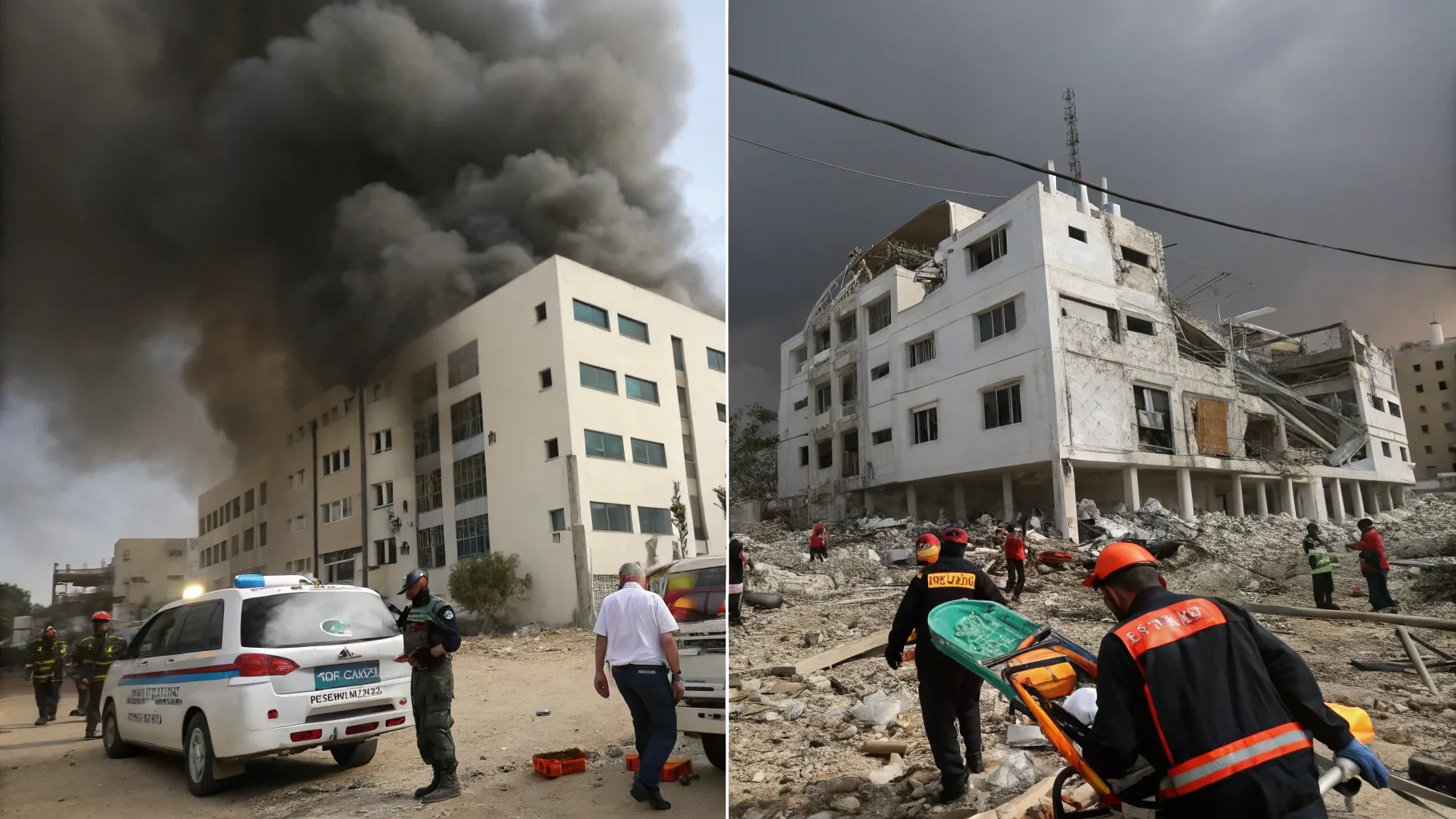
When it comes to the ongoing conflict between Israel and Gaza, few figures embody contradiction quite like Benjamin Netanyahu. Recently, Netanyahu expressed outrage over Iranian missile strikes targeting Israeli hospitals and civilian buildings. Yet, this outrage rings hollow when viewed against the backdrop of Israel’s own relentless bombing campaign in Gaza, where hospitals, schools, churches, and mosques have been decimated, and civilians—especially children—have borne the brunt of the violence. This article unpacks the jaw-dropping hypocrisy of Netanyahu’s complaints, highlights the devastating humanitarian crisis unfolding in Gaza, and explores the broader implications of this conflict in a world teetering on the edge of nuclear threats and ethnic cleansing.

The Context: Iran’s Bombing of Israeli Buildings and Netanyahu’s Response
In recent weeks, Iran has launched missile strikes targeting Israeli infrastructure, including hospitals and residential buildings. These attacks have understandably caused outrage in Israel and among its allies, with Prime Minister Benjamin Netanyahu vocally condemning the strikes. Netanyahu has framed these attacks as evidence of Iranian barbarism and terrorism, emphasizing the targeting of innocent civilians, including infants and children in hospital wards.
Netanyahu’s rhetoric paints a picture of Israel as a victim of Iranian aggression, a nation under siege by a regime that threatens nuclear devastation and regional instability. He warns of Iran’s nuclear ambitions, portraying the Iranian government as the arch-terrorist regime, bent on wiping Israel off the map with nuclear weapons. This narrative aims to rally domestic and international support for Israel’s military actions and justify aggressive responses.
Yet, while Netanyahu’s anger over Iranian missile strikes is loud and clear, it starkly contrasts with Israel’s own conduct in Gaza, where Israeli forces have systematically bombed civilian infrastructure, including hospitals, and caused immense suffering to the Palestinian population.
Israel’s Bombing Campaign in Gaza: Hospitals, Schools, and Civilians Under Fire
The brutal reality on the ground in Gaza tells a very different story from Netanyahu’s portrayal of Israel as a victim. Over the past year and more, Israel has launched repeated bombing campaigns against Gaza, targeting hospitals, universities, churches, mosques, and residential areas. The destruction has been widespread and devastating.
One of the most infamous incidents involved the bombing of the Al-Shifa hospital, which Israel initially tried to justify by claiming the presence of underground bunkers and Hamas military infrastructure beneath the hospital. Animated videos and testimonies were circulated attempting to convince the public that the hospital was a legitimate military target. However, investigations and eyewitness accounts revealed that while tunnels and bunkers do exist in Gaza, the hospital was primarily a civilian facility, and the scale of the military infrastructure was vastly exaggerated.
Israel’s justification quickly eroded in the face of mounting evidence that hospitals were being bombed indiscriminately. The campaign escalated to the point where Israel no longer bothered offering excuses or alibis for attacks on medical facilities. The bombing of hospitals became a stark reality, emblematic of an ethnic cleansing campaign aimed at Gaza’s civilian population.
This pattern of destruction is not isolated. Universities, places of worship, and homes have been systematically targeted, causing a humanitarian disaster. UNICEF reports that only 40% of drinking water production facilities in Gaza remain operational, contributing to what it calls a “man-made drought.” Malnutrition among children aged 6 months to 5 years has surged by 50%, and recent reports indicate that at least 25 people were killed by Israeli fire while seeking humanitarian aid.
Targeting of Hospitals: A War Crime in Plain Sight
Hospitals should be sanctuaries during conflict, protected by international law and humanitarian conventions. Yet, the reality in Gaza is a tragic inversion of this principle. Israeli bombs have struck children’s wards, infant nurseries, and maternity units. Netanyahu’s complaints about Iranian missiles hitting Israeli hospitals fall flat when juxtaposed with Israel’s repeated, often indiscriminate, attacks on Gaza’s medical facilities.
Netanyahu, in his public statements, tries to drum up sympathy by highlighting Iranian missile strikes on children’s wards in Israel. But the audacity of this outrage is staggering given Israel’s own record. The Israeli military has repeatedly bombed hospitals next to military bases, claiming military necessity, but the civilian casualties and destruction are undeniable. The hypocrisy is not just in words but in actions that speak louder than any political rhetoric.
Ethnic Cleansing and Genocidal Campaigns: The Bigger Picture
The scale and nature of Israel’s bombing campaign in Gaza have led many observers to characterize it as an ethnic cleansing operation. After targeting universities, Israel turned its sights on churches and mosques, striking indiscriminately at civilian infrastructure. This is not warfare conducted with precision or restraint; it is a campaign aimed at decimating Gaza’s social and cultural fabric.
Netanyahu’s rhetoric about Iran’s threats and nuclear ambitions serves as a smokescreen for this aggressive campaign. By painting Iran as the ultimate villain, Netanyahu seeks to justify Israel’s actions and deflect international criticism. But this framing ignores the immense suffering inflicted on Gaza’s civilians and the blatant violations of international humanitarian law.
The Nuclear Threat and Regional Stability
Netanyahu frequently warns of Iran’s nuclear ambitions, portraying the Iranian regime as a global threat. He claims that Iran’s leadership would use nuclear weapons to “wipe Israel off the map” and engage in nuclear blackmail. While Iran’s nuclear program is a legitimate concern for regional security, Netanyahu’s invocation of this threat is often intertwined with exaggerated claims and fear-mongering designed to sustain bipartisan support in the United States and justify military actions.
Interestingly, Netanyahu himself has not shied away from the specter of nuclear weapons, with Israel widely believed to possess its own undeclared nuclear arsenal. The broader geopolitical context involves a dangerous nuclear arms race and escalating tensions that threaten global security. Netanyahu’s selective outrage over Iranian missile strikes, while ignoring Israel’s own military excesses, highlights the double standards at play.
The Hypocrisy of Netanyahu’s Narrative: A Closer Look
Benjamin Netanyahu’s public statements about Iranian missile strikes on Israeli hospitals reveal a deep-seated hypocrisy. His complaints about Iranian attacks are made with a tone of moral indignation that seems almost surreal when contrasted with Israel’s own conduct in Gaza.
Consider the following points:
- Israel’s bombing of hospitals in Gaza: Netanyahu complains about Iranian missiles hitting Israeli hospitals, yet Israel has repeatedly bombed Gaza’s hospitals, often deliberately or with reckless disregard for civilian life.
- Targeting of infants and children: Netanyahu highlights attacks on children’s wards in Israel, but Israel’s bombing campaigns have killed and injured countless Palestinian children in Gaza, many in medical facilities.
- Claims of military necessity: Israel justifies its attacks as targeting Hamas military infrastructure, but evidence shows that many of the bombed sites were civilian, including schools, churches, and hospitals.
- Silence on humanitarian crisis: Netanyahu ignores or downplays the man-made humanitarian disaster in Gaza, including water shortages, malnutrition, and deaths caused by lack of medical care.
- Rhetoric vs. reality: Netanyahu’s fiery speeches about Iranian threats serve domestic and international political purposes but fail to address or acknowledge Israel’s own role in perpetuating violence and suffering.
This hypocrisy is not merely a matter of political spin; it has real-world consequences. By deflecting blame and denying responsibility, Netanyahu’s narrative perpetuates the cycle of violence and obstructs prospects for peace and justice.
Humanitarian Impact: The Toll on Gaza’s Civilians
The people of Gaza are living through a nightmare. The bombing campaigns have destroyed essential infrastructure and brought the population to the brink of collapse. According to UNICEF, only 40% of Gaza’s drinking water production facilities are operational, creating a severe water crisis. The organization has described this as a “man-made drought,” directly resulting from Israeli military actions and blockades.
Malnutrition rates among children aged 6 months to 5 years have surged by 50%, reflecting the devastating impact of food shortages and disrupted healthcare services. The destruction of hospitals means that many who are injured or ill cannot receive adequate treatment, leading to preventable deaths.
Just recently, at least 25 people were killed while seeking humanitarian aid, struck by Israeli fire. These are civilians, desperate for basic necessities, caught in the crossfire of a conflict where their suffering is often ignored or minimized by those in power.
The Psychological and Social Consequences
Beyond the physical destruction, the psychological trauma inflicted on Gaza’s population is profound. Children have grown up knowing nothing but war, instability, and loss. Families are torn apart, and the social fabric is fraying under the strain of violence and deprivation.
Healthcare workers, educators, and community leaders operate under constant threat, struggling to provide services amid bombed-out buildings and scarce resources. The targeting of hospitals and schools is not just a military tactic; it is an assault on the future of Gaza’s society.
The Call for Accountability and Justice
In light of these realities, it is essential to call out the hypocrisy of leaders like Benjamin Netanyahu and demand accountability for actions that violate international law and human rights. The bombing of hospitals and civilian infrastructure cannot be justified under any circumstances.
True justice requires an honest reckoning with the facts on the ground. It means recognizing the suffering of Palestinian civilians in Gaza and holding all parties accountable for war crimes and crimes against humanity. It means rejecting double standards and demanding that leaders like Netanyahu be held to the same moral and legal standards they impose on others.
The Role of the International Community
The international community has a critical role to play in addressing this crisis. Diplomatic pressure, humanitarian aid, and efforts to broker ceasefires are necessary but insufficient if they fail to address the root causes of the conflict and the ongoing violations.
Countries and organizations that support Israel’s military actions without question contribute to the perpetuation of violence and suffering. Equally, those who dismiss Israel’s security concerns ignore legitimate fears of missile attacks and terrorism. A balanced, principled approach that respects human rights and international law is urgently needed.
Conclusion: The Need to See Through Netanyahu’s Wild Hypocrisy
Benjamin Netanyahu’s outrage over Iranian missile strikes on Israeli hospitals is a striking example of wild hypocrisy. While he condemns Iran for targeting civilians, Israel’s own bombing campaigns have devastated Gaza’s hospitals, homes, and communities. This double standard undermines any claim to moral authority and contributes to a tragic cycle of violence and suffering.
The humanitarian crisis in Gaza is dire, with water shortages, malnutrition, and deaths caused by lack of medical care. The targeting of civilian infrastructure, including hospitals and schools, constitutes a grave violation of international law and demands accountability.
Netanyahu’s rhetoric about Iranian nuclear threats and terrorism serves political ends but obscures the reality of Israel’s actions on the ground. To move toward peace and justice, the international community and all parties involved must confront these uncomfortable truths and demand an end to hypocrisy, violence, and oppression.
Only by acknowledging the full scope of the crisis and holding all actors accountable can we hope to break the cycle of conflict and create a future where civilians on both sides can live in safety and dignity.