


Trump’s War Against Venezuela Raises Alarms in Washington
Former President Donald Trump has escalated military operations against Venezuela, ordering a new wave of naval and air strikes on Venezuelan patrol boats in the Caribbean. The offensive, which began in early November 2025, marks the most aggressive U.S. action in Latin America in decades — and it is being conducted without congressional authorization.

According to Pentagon officials speaking anonymously to major media outlets, the strikes have targeted Venezuelan naval assets accused of trafficking arms and threatening U.S. interests near Caribbean shipping lanes. Trump has framed the attacks as part of a broader campaign to “restore stability” in the region and remove what he calls the “criminal Maduro regime.”
However, the scale of the military response and the absence of congressional oversight have triggered alarm across Washington.
Boats Destroyed in Expanding U.S. Naval Campaign
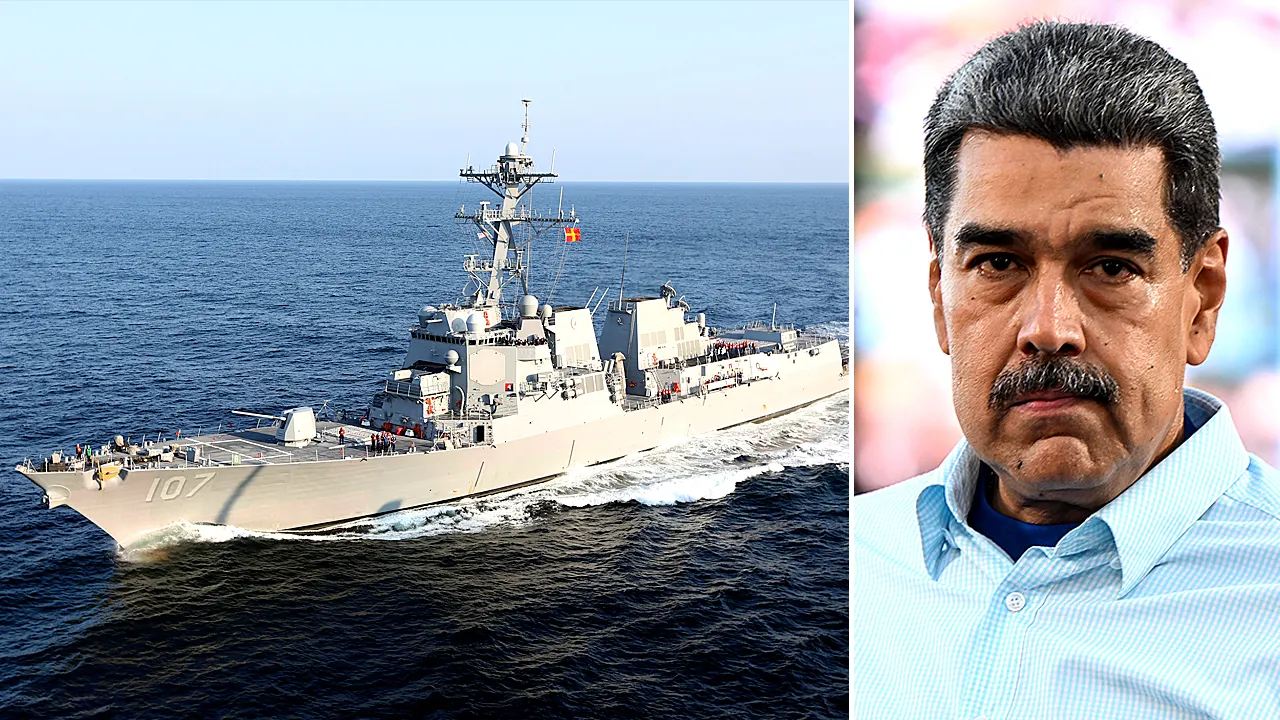
On November 7 and 8, U.S. Navy destroyers operating out of Naval Station Guantánamo Bay and southern Florida reportedly engaged multiple Venezuelan patrol boats near the Gulf of Paria and the Dutch Antilles.
Footage verified by several outlets shows fiery plumes rising from at least two Venezuelan naval vessels. Venezuelan state television confirmed the loss of the boats Carabobo and Bolívar, calling the attacks an “act of war.”
In a press conference aboard the USS Roosevelt, Trump praised the U.S. Navy for its “precision and courage,” saying:
“When they threaten our waters, our people, and our partners, we respond — fast and strong. We don’t wait for weak politicians in Washington to tell us how to protect America.”
That statement immediately drew condemnation from legal experts and members of Congress, who argue that the War Powers Resolution requires explicit approval before engaging in sustained hostilities.
Trump Avoids Congress as Tensions Surge
Trump’s decision to sidestep congressional authorization is being compared to past controversies over unilateral military action. Lawmakers from both parties have warned that his moves could set a dangerous precedent for presidential war powers.
Senator Chris Murphy (D-CT) called the strikes “an unconstitutional usurpation of Congress’s authority,” while Republican Senator Rand Paul urged restraint, saying, “You cannot bomb another sovereign nation into submission without the consent of the American people.”
Despite this, Trump maintains that he is acting under existing authorizations for the use of military force (AUMF) tied to anti-terror operations — a claim many experts dispute. The 1973 War Powers Act requires presidents to notify Congress within 48 hours of military engagement and to end operations within 60 days unless authorization is granted.
As of this week, the White House has yet to issue a formal notification.
Venezuelan Response: “An Attack on Sovereignty”
The Venezuelan government, led by President Nicolás Maduro, accused the United States of “imperialist aggression” and vowed to retaliate “within international law.” In an emergency address from Caracas, Maduro claimed that at least 18 Venezuelan sailors were killed and several others injured.
“Donald Trump has chosen the path of violence against our homeland,” Maduro declared. “We will defend our sovereignty and seek justice at the United Nations.”
Meanwhile, the Organization of American States (OAS) convened an emergency session to discuss the escalation, with Mexico and Brazil urging restraint while Colombia and Guyana expressed support for “regional stability efforts.”
Humanitarian and Diplomatic Fallout
International observers warn that the strikes could exacerbate Venezuela’s ongoing humanitarian crisis. The nation is already struggling with economic collapse, mass migration, and food shortages.
Relief organizations fear the new conflict could displace thousands more, as naval skirmishes disrupt shipping routes critical for humanitarian aid.
The United Nations Security Council has called for an emergency meeting, while Russia and China — key backers of Maduro — condemned the attacks and demanded that the U.S. “immediately cease hostilities.”
Diplomatic channels between Washington and Caracas have reportedly frozen, with the Swiss Embassy, which represents U.S. interests in Venezuela, warning Americans to leave the country immediately.
Political Motives Behind Trump’s Strategy
Analysts believe Trump’s military escalation may be aimed as much at domestic politics as at foreign strategy.
With the 2026 midterms approaching, Trump appears eager to project strength abroad and distract from ongoing investigations into his administration’s handling of classified documents.
“He’s using the same playbook he used in 2020 — provoke conflict, dominate headlines, and rally his base around a narrative of decisive leadership,” said Dr. Elena Vargas, a professor of political science at Georgetown University.
Polls show Republican voters remain broadly supportive of “strong action” against socialist regimes, but independents and Democrats overwhelmingly oppose another Latin American intervention.
Constitutional Scholars Warn of Crisis
Legal scholars warn that Trump’s decision to bomb Venezuelan targets without authorization could spark a constitutional showdown.
“The president is not a king,” said Harold Koh, former legal adviser to the State Department. “If he can wage war without Congress, then Congress has effectively surrendered one of its most fundamental powers.”
Advocacy groups are urging lawmakers to invoke the War Powers Resolution to force a withdrawal of U.S. forces within 30 days unless a formal declaration is made. So far, Trump has dismissed these calls, insisting, “Congress talks — I act.”
Regional Impact: Latin America on Edge
Countries across Latin America are bracing for fallout. In Colombia, leaders fear that Venezuelan militias may cross the border, while Caribbean nations are preparing for potential oil spills and refugee surges.
The conflict has also rattled global energy markets — with crude oil prices jumping above $100 per barrel as shipping routes through the Caribbean grow increasingly dangerous.
Conclusion: A Growing Test of Power
As the confrontation deepens, Donald Trump’s war with Venezuela has become a litmus test for the limits of presidential authority in America.
While his administration insists the strikes are defensive and limited, critics warn that the line between deterrence and war has already been crossed.
With boats burning off the Venezuelan coast, Congress divided, and allies alarmed, the world is watching to see whether Trump will seek legitimacy through the democratic process — or continue to wage war without permission.