




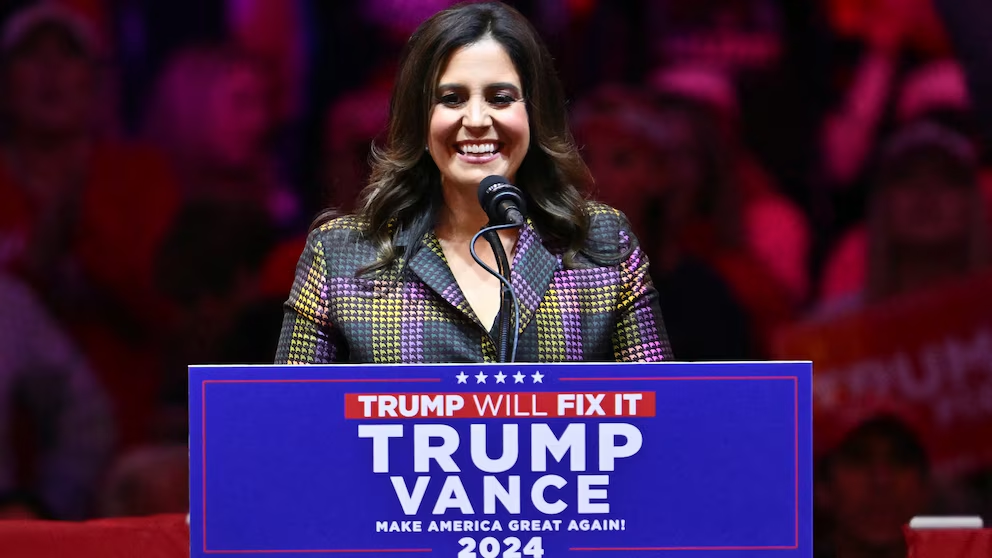
After months of speculation and careful maneuvering, Representative Elise Stefanik has officially declared her candidacy for governor of New York in the 2026 election cycle — setting up a high-stakes contest against incumbent Governor Kathy Hochul and placing the state’s political direction under renewed national scrutiny.

1. The announcement: what happened
On November 7, 2025, Stefanik launched her gubernatorial campaign with a multimedia announcement that painted New York as “in ashes” and in need of a rebound under new leadership. AP News+2Politico+2 In her launch video she critiqued Hochul’s tenure, declaring the state to be “the most unaffordable” and lacking safety and growth potential under current Democratic leadership. Politico+1
Her announcement marks the transition from speculation to official contender. Data and news outlets had been tracking her “when — not if” campaign trajectory for several months. WPTZ+2NCPR+2
2. Why she’s running — and what she’s emphasizing
Stefanik’s campaign message centers around three major themes: affordability, safety, and change. She frames her candidacy as a sweeping solution to the problems she alleges have plagued New York under Democratic control: high taxes, rising rents and utility costs, and concerns about crime and economic exodus. New York Post+1
Beyond the message, her run also reflects broader strategic considerations:
-
With other Republican potential candidates stepping aside — such as Mike Lawler deciding to remain in Congress instead of launching a gubernatorial bid — Stefanik appears positioned to be the GOP’s de facto standard bearer in New York. The Washington Post+2Times Union+2
-
Her establishment of a PAC (“Save New York”) earlier in 2025 suggests she was laying the groundwork for a statewide campaign, raising resources and building a network. Times Union+1
-
Her alignment with national Republican figures and strategies — including the role of former President Donald Trump in clearing the Republican field — connects her candidacy to a larger national dynamic. Axios+1
3. The opponent and the battlefield
Governor Kathy Hochul, first elevated to the post in 2021 and elected to a full term in 2022, is Stefanik’s likely opponent. New York remains a heavily Democratic-leaning state, which means Stefanik faces an uphill climb — but one that is arguably more competitive than at first glance. Newsweek+1
Polling in 2025 showed Stefanik gaining ground in hypothetical match-ups: one survey put her virtually tied with Hochul. New York Post+1 That said, Stefanik’s broader favorability is relatively low among the general electorate (though strong in GOP primaries). Times Union
The key battlegrounds will likely include:
-
Upstate New York and suburban regions, where Stefanik has stronger name recognition and where economic issues may resonate differently than in New York City.
-
GOP turnout and mobilization: Stefanik’s campaign will need to both energize the Republican base and make inroads with independents in order to breach the Democratic‐leaning electorate.
-
Messaging on economic, social and public-safety issues: she has already framed the race as a referendum on Hochul’s performance.
4. What Stefanik brings and what she must overcome
Strengths:
-
She is nationally known and has experience in high‐profile politics, which gives her fundraising and media advantages.
-
She has early momentum — both through her PAC and the cleared Republican field.
-
Her base is energized around the themes she emphasizes (taxes, affordability, safety).
Challenges:
-
New York State’s electorate strongly favors Democrats, particularly in urban centers. Winning will require shifts in voting patterns or exceptional turnout among her supporters.
-
Her public perception among independents and moderates is mixed; unfavorable numbers may hamper her ability to expand beyond the core GOP base. Times Union
-
She will have to defend her own record (in Congress) and respond to attacks linking her to national partisan battles or extremism, especially given endorsements and associations.
-
She must build a statewide campaign infrastructure that reaches across very different regions (rural upstate, suburbs, parts of NYC).
5. What this means for New York politics (and beyond)
Stefanik’s gubernatorial bid has several wider implications:
-
For Republicans: If Stefanik runs a strong race, it could signal that even heavily Democratic states like New York might be vulnerable under the right conditions. This could encourage more ambitious GOP candidates in ‘blue’ states.
-
For Democrats: Hochul’s team will have to defend not only a governorship but the broader narrative of Democratic governance in New York. If Stefanik is able to make the election about local economic pain points, Hochul may find the terrain shifting.
-
For national politics: Because Stefanik is tied to national figures and themes (like Trump, MAGA, affordability, law enforcement), this race may serve as a bellwether for how those themes play outside the typical battleground states.
-
For New York voters: The campaign is likely to sharpen focus on issues like cost of living, migration from the state, public safety and how state policies impact everyday life. That could push both parties to more clearly define and differentiate their visions for the state.
6. The timeline ahead
With the 2026 election on the horizon, key milestones for Stefanik’s campaign include:
-
Formalizing her campaign team and statewide rollout (though her announcement signals that this is underway).
-
Securing endorsements and fundraising (steering early momentum into sustained campaign infrastructure).
-
Solidifying her message and platform — turning the broad themes of affordability and safety into concrete policy proposals that can appeal beyond her base.
-
Debates and primary positioning: While she is currently the leading Republican contender, she will still need to win the GOP primary before moving on to the general election. Times Union+1
-
Mobilizing voters: Particularly outside of her congressional district, she needs to build name recognition and persuade voters in suburbs and possibly parts of the city.
-
Responding to attacks: Given the inevitable scrutiny, she will need to defend her record and avoid being framed as a purely national-politics candidate rather than a state-focused leader.
7. Final thoughts
Elise Stefanik’s decision to run for governor of New York is bold — and it reflects both her ambition and the shifting dynamics in state and national politics. While the odds are challenging, her candidacy raises the stakes in the 2026 gubernatorial race, creating a scenario where what happens in New York may send ripples across American politics.
For voters, the message is clear: the next governor will be asked to navigate affordability, economic migration, public safety and the role of state government in a changing era. Stefanik is arguing she is the one to bring change; the question now is whether New Yorkers will agree.