


Second Suspected Pneumonic Plague Death Reported in Russia as Officials Deny Outbreak
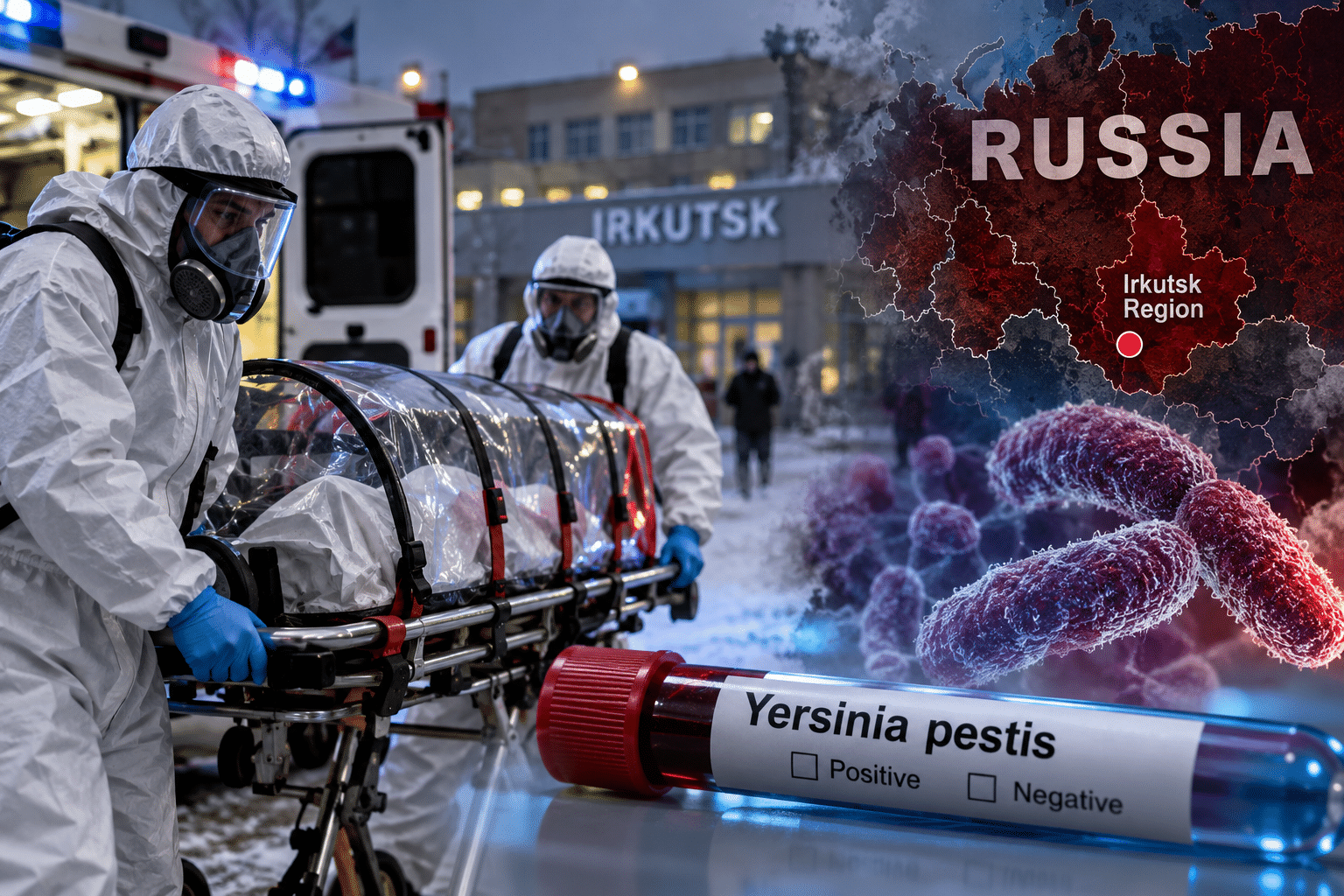
Reports of a second suspected death linked to pneumonic plague in Russia have added to growing international concern surrounding a mysterious illness in the Siberian region of Irkutsk.

However, the reported second death has not been independently confirmed as pneumonic plague, and Russian health authorities continue to deny that a plague outbreak has been identified.
Second Death Reported Amid Growing Plague Concerns
Russian and international media are closely following reports that another person may have died in the Irkutsk region after allegedly contracting plague.
The report comes days after the death of 28-year-old Darya Shipilova, a laboratory worker at the Irkutsk Anti-Plague Research Institute. Shipilova died after developing severe pneumonia.
Some reports have linked her illness to possible exposure to Yersinia pestis, the bacterium responsible for plague. Other accounts have suggested a possible laboratory accident involving a broken test tube.
Russian authorities, however, have said Shipilova died from pneumonia of unknown cause and have denied finding evidence that she contracted plague.
Russia Denies a Confirmed Plague Outbreak
Russia’s public-health watchdog, Rospotrebnadzor, says testing of people who came into contact with Shipilova has not identified plague.
The World Health Organization also said Russian authorities reported no confirmed plague cases in Irkutsk and that people who had contact with the deceased worker tested negative for dangerous infectious pathogens. The WHO currently considers the risk to the wider population to be low.
Nearly 200 people were reportedly placed under medical observation following Shipilova’s death as authorities investigated the situation.
International health authorities, including the European Centre for Disease Prevention and Control, are continuing to monitor developments. The ECDC says there are currently no reports of secondary cases or evidence of sustained human-to-human transmission.
What Is Pneumonic Plague?
Pneumonic plague is the most serious form of plague because it affects the lungs and can be transmitted between people through respiratory droplets.
The disease is caused by the bacterium Yersinia pestis. Symptoms can include fever, weakness, cough, chest pain and rapidly developing pneumonia.
Unlike the medieval outbreaks associated with the Black Death, modern plague infections can generally be treated with antibiotics when diagnosed and treated promptly.
The disease remains rare, but pneumonic plague can become life-threatening quickly if treatment is delayed.
Why the Russian Reports Are Causing Concern
The conflicting reports have attracted international attention because Shipilova reportedly worked at a facility specializing in dangerous infectious diseases.
Questions remain about exactly what caused her illness and whether she was exposed to Yersinia pestis.
Reports of a second possible death have increased those questions, but there is currently no independent confirmation that the person died from pneumonic plague.
The uncertainty has also prompted calls for greater transparency regarding testing and the circumstances surrounding the original death.
U.S. Secretary of State Marco Rubio has called on Russia to provide more information, while the WHO says it is continuing to work with Russian officials.
Is There a Plague Outbreak in Russia?
At this time, there is no confirmed evidence of a pneumonic plague outbreak in Irkutsk, according to Russian authorities and information provided to the WHO.
That distinction is important.
While reports of suspected cases and deaths are circulating, health officials have not confirmed sustained person-to-person transmission or a wider outbreak.
The WHO has assessed the risk as moderate to low for the Irkutsk region, low for Russia overall and very low for the European region.
Authorities are continuing to monitor people who may have been exposed while investigators work to determine the actual cause of the reported illnesses.
What Happens Next?
Health officials are expected to continue testing contacts and reviewing medical and laboratory evidence.
The biggest unanswered questions are whether Yersinia pestis was involved in the original death and whether the newly reported second death has any connection to the same illness.
Until laboratory confirmation is released, health authorities are urging people to rely on verified information rather than unconfirmed reports circulating online.
For now, the reported second death should be considered suspected rather than confirmed, while international health organizations continue monitoring the situation.
22Verse2 Newsroom will continue following developments as officials release new information about the suspected pneumonic plague cases in Russia.