




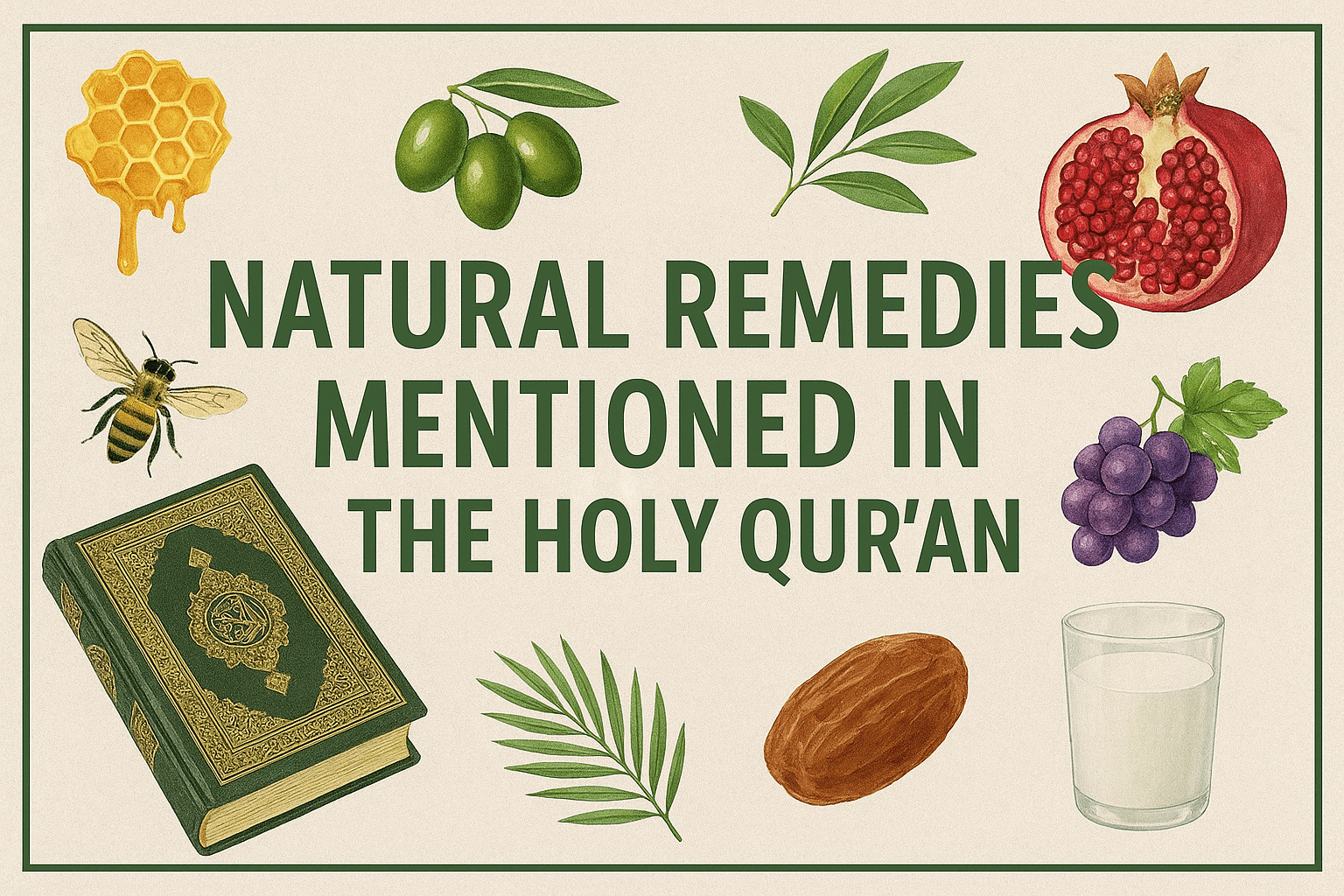
SEO-Optimized, 2000+ Words

Introduction
Since the beginning of time, humanity has sought healing through nature. Many cultures, civilizations, and religious traditions have looked to the natural world for cures, strength, and vitality. Among these sacred traditions, the Holy Qur’an stands out as a text that highlights specific natural substances as signs of divine mercy, sources of nourishment, and means of healing.
Although the Qur’an is not a medical textbook, it mentions numerous foods, herbs, and natural elements in the context of blessings, nourishment, strength, and spiritual significance. Over centuries, scholars, herbalists, and practitioners of Prophetic Medicine (Tibb an-Nabawi) have studied these verses, building entire healing systems based on Qur’anic guidance and the teachings of Prophet Muhammad ﷺ.
This article explores every natural remedy mentioned in the Holy Qur’an, analyzing their spiritual meaning, historical significance, and modern health benefits. Whether you are a student of Islamic medicine, a wellness researcher, or someone seeking natural healing, this comprehensive guide offers both sacred insight and practical value.
1. Honey: The Only Substance Specifically Called “Healing” in the Qur’an
Of all natural remedies, honey holds a uniquely elevated status. It is the only food in the Qur’an explicitly described as containing healing properties.
📖 Qur’anic Verse
“There comes forth from their bellies a drink of varying colors, wherein is healing for mankind.”
— Surah An-Nahl 16:69
This verse refers to the production of honey by bees, emphasizing that Allah Himself places healing within it.
Traditional and Modern Benefits
Honey has been used for thousands of years in medicinal traditions. Today, science confirms many of these benefits:
- Powerful antibacterial and antimicrobial properties
- Soothes sore throats and coughs
- Aids digestion and supports gut health
- Boosts energy naturally
- Promotes healing of wounds and burns
- Rich in antioxidants
Prophet Muhammad ﷺ also endorsed honey, stating:
“Honey is a remedy for every illness.” (Bukhari)
It is not only a Qur’anic remedy but a Prophetic prescription, making it one of the most sacred natural healing agents in Islam.
2. Olive and Olive Oil: A Blessed Tree in the Qur’an
Olives and olive oil are mentioned repeatedly, often symbolizing purity, nourishment, and divine blessing.
📖 Qur’anic References
“By the fig and the olive…”
— Surah At-Teen 95:1
“…a tree that grows on Mount Sinai, producing oil and food for those who eat.”
— Surah Al-Mu’minun 23:20
Why Olive Oil Is Blessed
Olive oil is known for:
- Anti-inflammatory properties
- Heart and cardiovascular health
- Skin healing and hydration
- High nutritional value
- Use as food and as topical medicine
The Prophet ﷺ said:
“Eat olive oil and anoint yourselves with it, for it is from a blessed tree.”
This makes the olive tree both a Qur’anic and Prophetic remedy.
3. Dates & Date Palms: Qur’anic Nourishment and Strength
Dates play an essential role in Islamic tradition as both a symbol of sustenance and a tool for healing.
📖 Qur’anic Reference
During childbirth, Maryam (Mary), mother of Isa (Jesus), was commanded:
“Shake the trunk of the palm tree toward you; it will drop fresh ripe dates upon you.”
— Surah Maryam 19:25
Why Dates Are Healing
Modern research confirms the wisdom behind this instruction:
- High in natural sugar for energy
- Contains potassium, iron, and magnesium
- Assists in childbirth and postpartum recovery
- Supports digestion
- Strengthens the body and improves stamina
Dates have long served as food, medicine, and survival nutrition in desert cultures. They remain a staple in Islamic diets today, especially during Ramadan.
4. Milk: Pure Nourishment Described in the Qur’an
Milk is praised as a divine provision that emerges in a miraculous way.
📖 Qur’anic Verse
“…We give you pure milk, pleasant to drink…”
— Surah An-Nahl 16:66
The Qur’an presents milk as a sign of Allah’s creative power, extracted between blood and waste, yet emerging pure and nutritious.
Healing and Nutritional Benefits
- Rich in calcium and vitamin D
- Strengthens bones and teeth
- Provides protein and healthy fats
- Traditionally used to treat weakness and undernourishment
Milk is considered a complete food, especially in Islamic herbal traditions.
5. Water: The Foundation of All Life and Healing
Water is essential not only for physical health but also spiritual purification.
📖 Qur’anic Verse
“We made from water every living thing.”
— Surah Al-Anbiya 21:30
The Qur’an mentions water more than 60 times, often emphasizing its healing, purifying, and life-giving roles.
Healing Aspects
- Required for every cell in the body
- Hydrates and detoxifies
- Essential for digestion
- Used for wudu (ablution), which has psychological and physical benefits
Although Zamzam water is not named in the Qur’an, hadith tell us:
“Zamzam water is for whatever it is drunk for.”
— Prophet Muhammad ﷺ
This makes it one of the most spiritually significant healing waters in the world.
6. Ginger (Zanjabeel): A Drink for the People of Paradise
Ginger is mentioned not as an earthly remedy but as a drink served to the righteous in Paradise.
📖 Qur’anic Verse
“…They will be given a drink mixed with ginger.”
— Surah Al-Insan 76:17
Healing Benefits of Ginger
- Anti-nausea
- Anti-inflammatory
- Improves digestion
- Boosts circulation
- Helps relieve pain
Although the Qur’an refers to ginger in a heavenly context, believers throughout history have recognized its earthly benefits as well.
7. Grapes: Among the Qur’an’s Most Mentioned Fruits
Grapes appear in several verses as symbols of provision and luxury.
📖 Qur’anic Reference
“And We produce gardens of grapevines…”
— Surah Al-An‘am 6:141
Benefits
- High in antioxidants (including resveratrol)
- Improves heart health
- Hydrating and nutrient-rich
- Supports digestion
Grapes—fresh or dried (raisins)—play an important role in Islamic diets and are widely used in herbal medicine.
8. Pomegranate: A Fruit of Paradise
Pomegranates are also highlighted in the Qur’an as blessings from Allah.
📖 Qur’anic Verse
“…pomegranates, similar yet different…”
— Surah Al-An‘am 6:141
Healing Benefits
- Powerful antioxidants
- Supports blood circulation
- Strengthens immunity
- Cleanses the digestive tract
Its beauty, flavor, and health benefits make the pomegranate one of the Qur’an’s most symbolic fruits.
9. Figs (At-Teen): Mentioned Alongside the Olive
Although mentioned briefly, figs hold deep symbolic and medicinal value.
📖 Qur’anic Verse
“By the fig and the olive…”
— Surah At-Teen 95:1
Benefits
- High in fiber
- Promotes digestive health
- Supports detoxification
- Rich in minerals
Figs have been used historically to treat constipation, weakness, and various skin conditions.
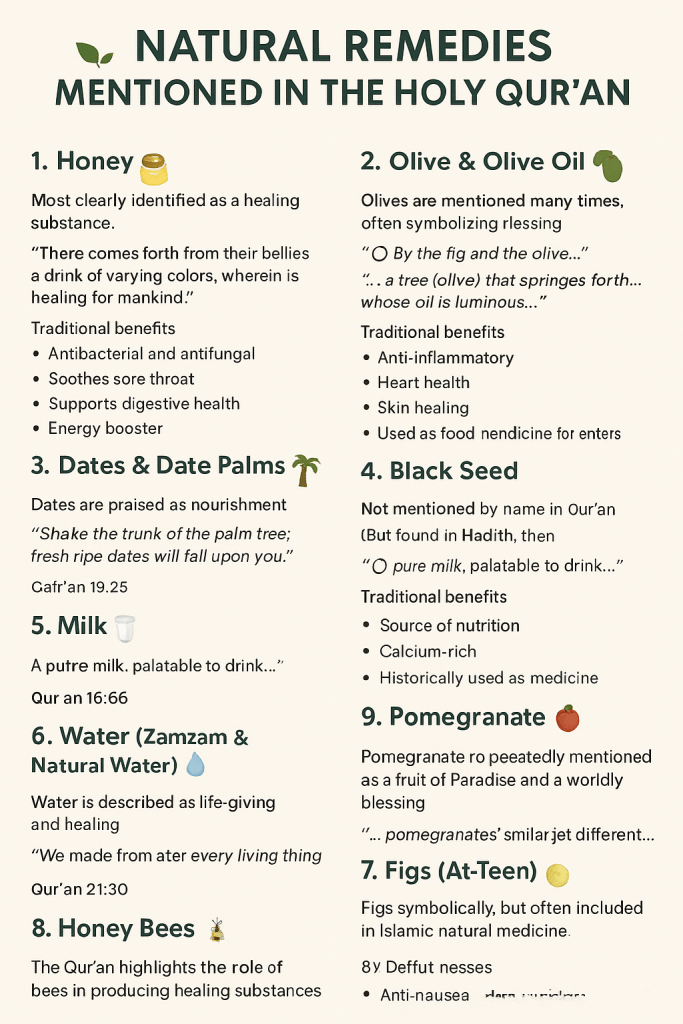
10. Herbs and Green Plants: Universal Blessings
Although the Qur’an does not name specific herbs like mint or thyme, it mentions green plants and vegetation as blessings and healing sustenance.
📖 Qur’anic Reference
“…herbage, olives, date palms, grapevines, and all kinds of fruits…”
— Surah An-Nahl 16:11
General Healing Roles of Herbs
- Detoxification
- Digestive support
- Anti-inflammatory properties
- Immune system strengthening
All green plants are described as part of Allah’s mercy to mankind.
Bonus: Remedies from Hadith (Not in Qur’an, but Important in Islamic Medicine)
Although the user’s question targeted Qur’anic remedies, the following items are commonly linked to Islām due to their appearance in Prophetic traditions:
- Black Seed (Nigella Sativa) – “a cure for every disease except death”
- Cupping (Hijama) – highly recommended in Hadith
- Zamzam Water – “a cure for whatever it is drunk for”
- Vinegar – “what a good condiment vinegar is!”
These are not Qur’anic remedies but are essential parts of Prophetic healing practices.
Conclusion
The Holy Qur’an contains a wealth of divine wisdom regarding natural foods, plants, and substances that nourish, strengthen, and heal. Honey is highlighted specifically as a healing remedy, but olives, dates, ginger, pomegranates, figs, grapes, milk, and water all play significant roles in Islamic history and health traditions.
By studying these remedies, we gain more than physical health—we reconnect with the centuries-old understanding that healing ultimately comes from Allah, and nature is one of His greatest gifts.